
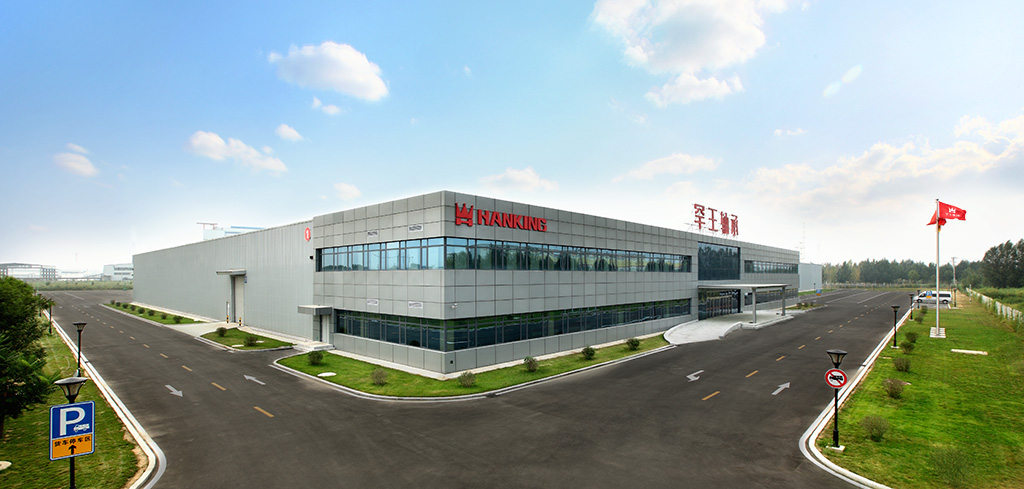
Shenyang Hanking Precision Bearing Co., Ltd. was established in 2010 in the Shenyang Economic and Technological Development Zone and is an important operating platform for Hanking Group’s high-end manufacturing business. The company focuses on the research, development and manufacture of medium-to-large, high-precision rolling bearings, supplying long-life, highly reliable critical components for major equipment.
The production base covers approximately 134,000 square metres and has established a manufacturing system encompassing product design, materials and heat treatment, precision machining, inspection and validation, and quality control. Products range from 100 to 1,400 millimetres in outside diameter, with precision grades up to P2, providing specialised manufacturing capabilities for medium, large and extra-large bearings.
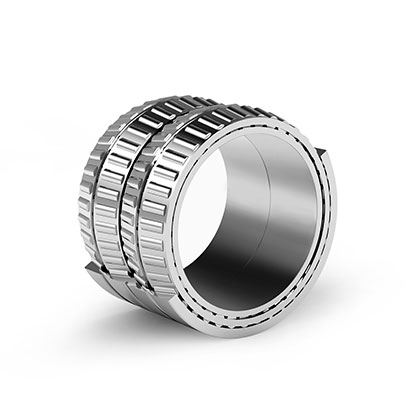
To meet the needs of equipment operating under high loads and complex conditions, the company focuses on tapered, cylindrical and spherical roller bearings. The different bearing structures provide complementary capabilities in load capacity, self-alignment, installation and maintenance, and operating speed, enabling application-specific design and selection.
Hanking Precision Bearing products principally serve wind power, shield tunnelling equipment, metallurgical rolling mills, mining machinery, construction machinery and large gearboxes. These applications typically involve heavy loads, severe impacts, long operating cycles and high maintenance costs, placing stringent demands on bearing design, material performance, machining accuracy and operational reliability.
In wind-power equipment, main-shaft bearings must operate reliably at low speeds, under high torque and continuously alternating loads, while gearbox bearings must also accommodate higher speeds, complex load transfer and changing lubrication conditions. Wind turbines are often installed at height, along coastlines or in remote areas with limited maintenance windows, so bearing fatigue life, temperature-rise control, sealing protection and stable operation directly affect overall turbine availability.
For different support positions in wind-turbine main shafts and gearboxes, the company can select tapered, cylindrical, spherical or full-complement roller bearings according to load direction, shaft-system stiffness and installation space. Raceway profiling, clearance matching and material heat treatment are used to improve long-term reliability. The company produced its first wind-power bearing products in 2018, and the project in which it participated—“Development and Industrialisation of a Full Range of Bearings for 10 MW Wind-Turbine Gearboxes”—received the Second Prize of the 2024 Machinery Industry Science and Technology Award.
In shield machines and tunnel-boring equipment, the large main bearing sits between the cutterhead and the main drive system and is the core component that bears and transmits excavation loads. As equipment advances through different soil, rock and groundwater conditions, the main bearing must withstand enormous axial and radial forces and overturning moments while maintaining rotational accuracy at low speed under heavy load. A failure can make underground replacement exceptionally difficult and cause substantial downtime losses.
Shield-machine main bearings are large and contain numerous rollers, creating systematic requirements for material cleanliness, raceway machining, roller dimensional consistency, cage strength and assembly accuracy. The company participates in collaborative domestic research along the industrial chain for large shield-machine main bearings and has developed expertise in Grade 1 precision machining of large rollers and in quenching, tempering and temperature-control processes, providing manufacturing support from development validation through engineering application.
In metallurgical rolling equipment, roll-neck bearings must withstand substantial radial and axial loads and rolling impacts within restricted installation space. Four-row tapered roller bearings combine a compact structure and high rigidity and can carry combined radial and axial loads. Cylindrical roller bearings provide high radial load capacity and favourable installation and removal characteristics and can be configured to suit mill structure, operating speed and roll-changing method.
Continuous casting equipment, converters and auxiliary metallurgical drives are also exposed to high temperatures, water vapour, dust and lubricant contamination, requiring bearings to combine impact resistance, thermal stability and ease of maintenance. At long shafts or drive-end positions that are difficult to dismantle, split spherical roller bearings may be replaced without removing the complete drive system, shortening maintenance time and reducing downtime costs.
In mining machinery and construction equipment, vibrating screens, crushers, conveyors and compactors are continuously exposed to eccentric forces, sustained vibration and instantaneous impacts, which can cause temperature rise, cage wear and impact damage in bearings. For spherical roller bearings used in vibrating screens, the company can employ reinforced steel cages and wear-resistant treatment and optimise ring materials, quenching processes and raceway contact conditions to improve impact and wear resistance.
Bearings for vibratory rollers and similar construction machinery must accommodate periodic impacts from different directions. Integrated cage structures, appropriately selected internal clearance and matching to actual temperature rise and load can reduce friction and abnormal heating during operation. The company supplies tapered, cylindrical and spherical roller-bearing solutions for vibrating screens, rollers and heavy-duty mining equipment.
Parallel-shaft, planetary and bevel-gear systems in large industrial gearboxes have different load paths, speed ranges and axial-location requirements. For heavy-duty and high-speed power machinery and large transmission equipment, the company can provide combinations of tapered, spherical, cylindrical and full-complement roller bearings. Bearing structure, precision, clearance and service life are matched to the radial and axial forces generated by gear meshing, shaft-system deformation and lubrication method.
Throughout product development, the company integrates application-data collection, operating-condition analysis, design calculations, simulation optimisation and validation assessment. CAE methods are used to analyse contact deformation, contact stress, oil-film thickness and lubrication conditions and to optimise rolling elements, raceways and internal structures under actual loads.
To address edge stress that may occur under high loads, the company uses techniques including micro-profiling of rolling contact surfaces to improve contact between rolling elements and raceways and distribute loads more evenly. Research, process-engineering and manufacturing teams work together to implement product designs and provide bearing solutions tailored to the operating conditions of different customers and equipment.
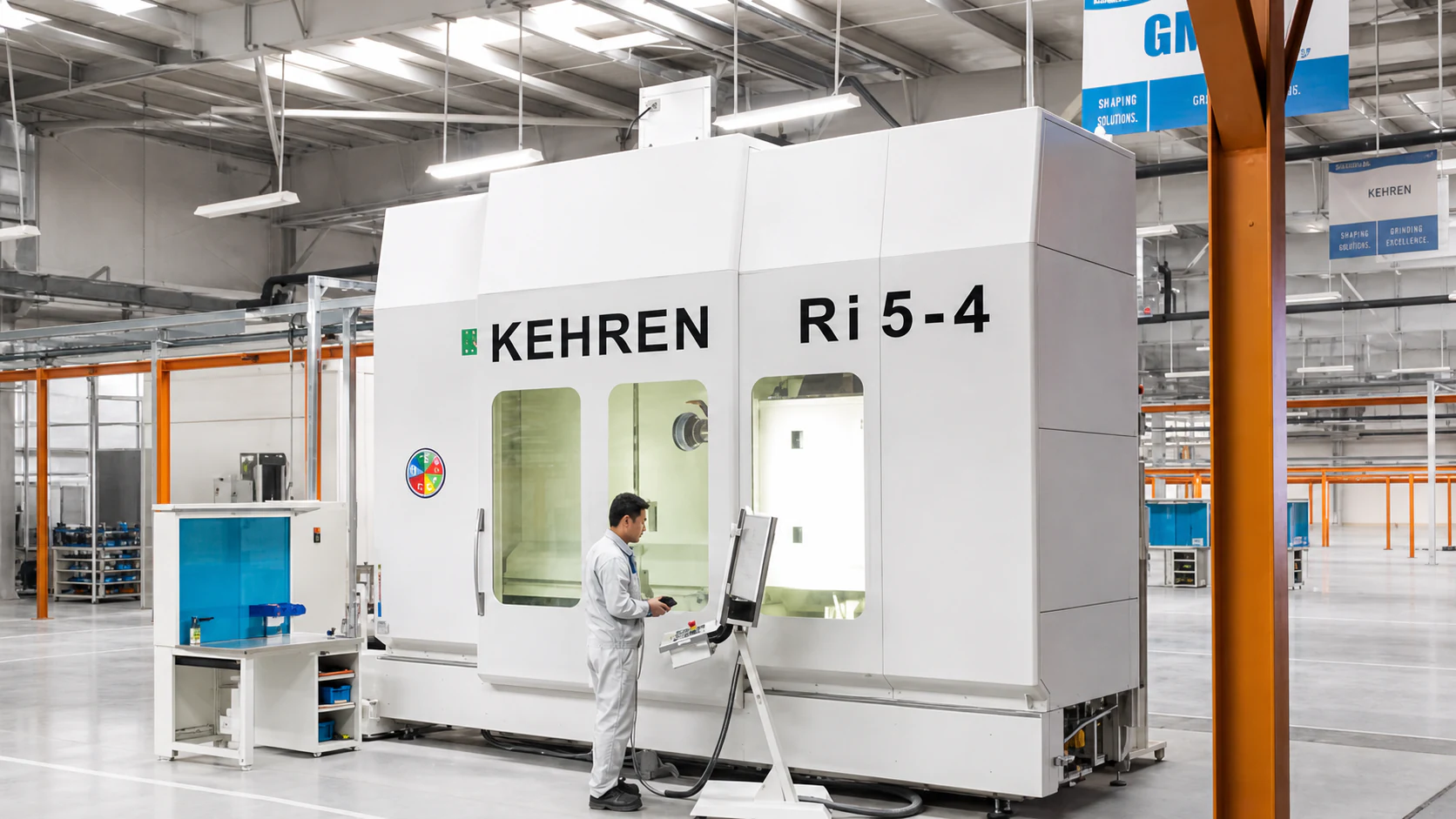
Manufacturing is supported by large precision grinding machines, in-process measurement systems and related specialist equipment. Reducing set-ups, standardising machining references and optimising process sequencing improve dimensional accuracy and product consistency. Complementary roller-manufacturing and heat-treatment capabilities support carburising and martensitic and bainitic quenching processes, safeguarding material performance and long-term reliability.
Looking ahead, Hanking Precision Bearing will continue to serve major equipment and high-end industrial applications, strengthen its research, manufacturing and quality-assurance systems, and enhance product performance, reliable delivery and full-life-cycle services for large precision bearings, contributing to the domestic supply of critical basic components for China’s high-end equipment industry.